The constellations
 |
The human being has always been guided by the stars. Since the beginning of time, astronomy has defined the passage of time, thus marking the appropriate times for planting and harvesting. Today, this link is no longer so strong, but we can still find aspects in which astronomy continues to contribute its strength.
Constellations in astronomy
In the past, a constellation was a group of stars joined by imaginary lines that formed a figure, usually an animal or mythological character. However, if we are strict, the constellations are more than that.
In 1927, the UAI (International Astronomical Union) divided the celestial sphere into 88 sectors. In this way, all the stars that are within a sector, are part of the same constellation. Still, astronomy buffs keep talking about those quirky imaginary shapes and explaining myths and legends to newcomers.
 | ||||||
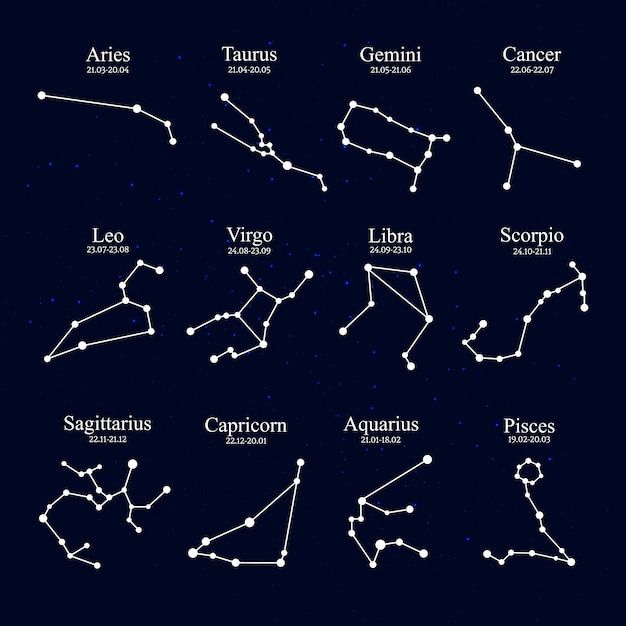
Zodiacal constellations
- There are some well-known constellations that are called zodiacal constellations. The Zodiac is the strip of the sky that extends eight degrees on both sides of the ecliptic and comes from the Greek and Babylonian culture.
- These civilizations divided that segment of the sky into twelve equal parts, which correspond to the traditional zodiacal constellations.
- These constellations are still used in that pseudoscience that is astrology. However, the sky has changed so much over thousands of years that, today, the Zodiac would be made up of 13 constellations. This extra constellation is Ophiuchus (the snake charmer), which is very little known.
 |
Different cultures, different constellations
- In Spain (and in general in Europe), they have a strong influence from the Greek and Roman world, but they also have an important Arab and Mesopotamian influence.
- Thus, what the Big Dipper is, in the United States it is "the great saucepan" and in Asian culture it is called "the official", which represents a sitting high ruler and his faithful walking towards him. The cart, the plow, the ox leg, and a host of other names define the same figure.
 |
What Did Hubble See on Your Birthday?
Hubble explores the universe 24 hours a day, 7 days a week. That means it has observed some fascinating cosmic wonder every day of the year, including on your birthday.
 |
Link |
